uPVC door won't lock? What's wrong and how to fix it
Your uPVC door won't lock, the handle won't lift, or the key spins. What's gone wrong, what to try tonight, and when to call a locksmith.
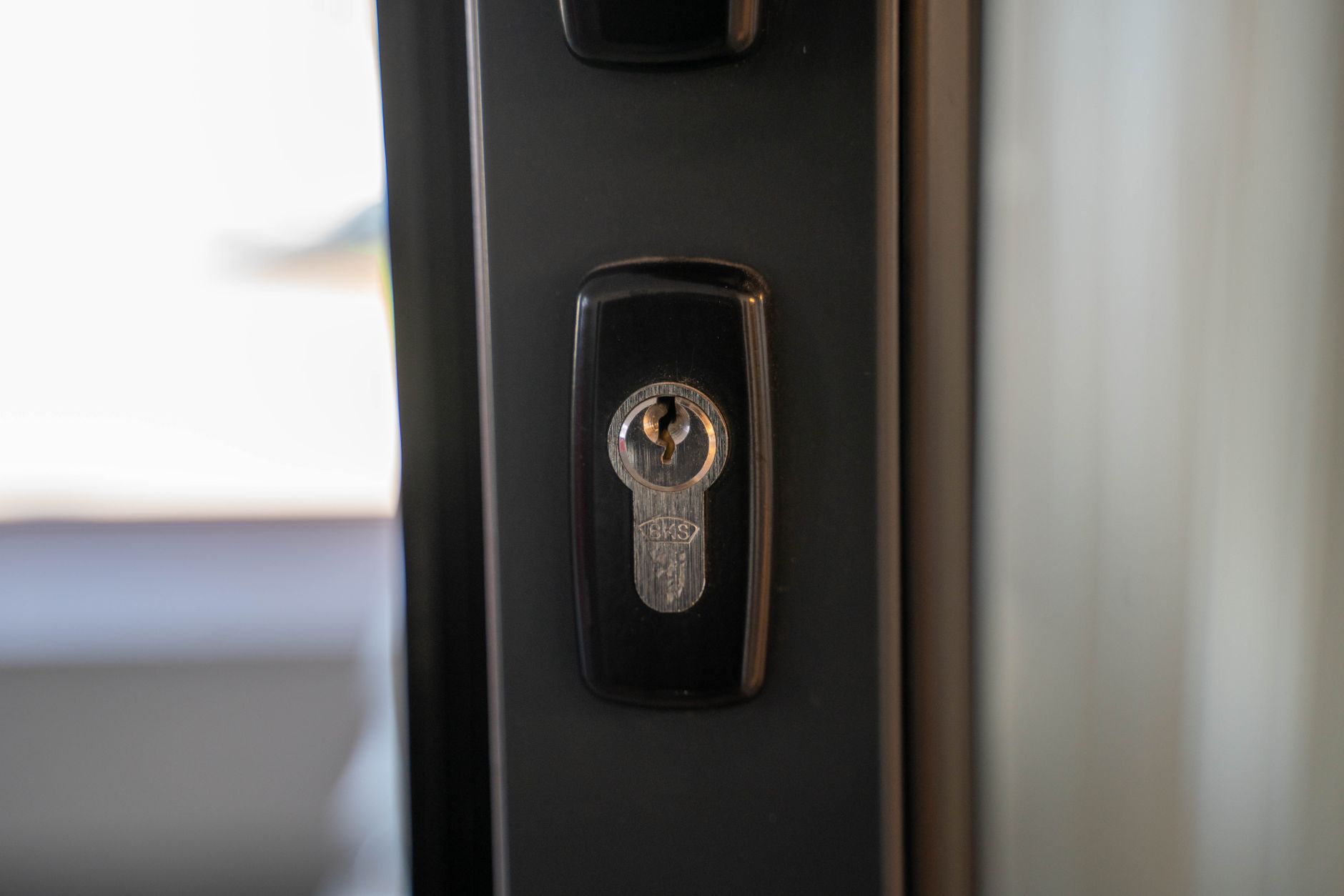
Your uPVC door won't lock. The handle won't lift, or it lifts and the key won't turn, or the key turns round and round and nothing happens. It is always the coldest night of the year when this happens. Locks seem to know.
Here's the good news: most of the time this is a small mechanical problem with an obvious cause, and some of it you can sort yourself in ten minutes. Here's what has actually gone wrong, what to try first, and the point where you should stop poking at it and call someone.
The gist
A uPVC door that won't lock is nearly always one of three things: the door has dropped out of alignment so the locking points foul the frame, the multipoint gearbox inside the door has worn out or snapped, or the euro cylinder the key goes into has failed. Alignment you can often ease yourself. A spinning key or a dead handle usually means a broken part and a locksmith. Whatever you do, don't force a stiff handle — that's how a small repair turns into a big one.
Why a uPVC door stops locking
When you lift the handle on a uPVC or composite door, you're driving a strip of gears and hooks — the multipoint mechanism — up and down inside the door edge. The key then throws a deadbolt through the gearbox. Three parts do the work, and three parts go wrong:
- Alignment. uPVC doors sag over the years as the hinges wear and the slab settles. A few millimetres is enough for the hooks and rollers to catch on the keeps in the frame instead of sliding into them. The tell: the handle lifts fine with the door open, and fights you when it's shut.
- The gearbox. The centre case that everything connects to. Years of stiff lifts wear the teeth, or a spring breaks, and suddenly the handle is loose, gritty, or won't move at all. This is the most common outright failure.
- The cylinder. The barrel the key slides into. If the key turns a full circle with no resistance and nothing locks, the cam on the cylinder or the connection to the gearbox has sheared.
Damp, grit and a total absence of lubrication speed all three of these along. So does slamming the door.
Try these before you call anyone
If the door is open, or shut but not locked, it's worth ten minutes before you pick up the phone. If the door is locked shut with you outside, skip to when to stop.
- Lift and test with the door open. Swing the door open, hold the handle, and lift. Smooth and easy? Your mechanism is fine and the problem is alignment. Stiff or dead? The gearbox is the suspect.
- Try the "lean" test. With the door shut, pull the handle towards the hinges — or push the door firmly closed with your hip — while you lift. If it suddenly locks, the door has dropped and the hooks were catching. That's your confirmation.
- Clean and lubricate. Wipe the door edge, then put a smear of white lithium grease or a PTFE spray on the hooks, rollers and the latch. Not WD-40 — it flushes out the grease that's there and dries sticky. Work the handle a dozen times.
- Check the hinges. uPVC hinges have adjustment screws under caps. A quarter turn to lift the door on the hinge side can bring the alignment back. Small movements, test after each one.
- Check the screws in the handle and keeps. A loose backplate or a keep that's worked its way out of line will stop a mechanism dead. Nip them up.
If one of those fixes it, you've saved yourself a call-out. If the handle is still loose, gritty or immovable, or the key spins, stop there.
How to tell if it's the gearbox
The gearbox is the expensive part, so it's worth knowing the signs before someone quotes you for one:
- The handle has gone light and floppy — no spring back — or it flops down on its own.
- The handle lifts halfway and stops against something solid that isn't the frame.
- You hear a crunch or a click and then nothing engages.
- The door locked fine last week and now the key turns freely with the handle up.
Any of those and the mechanism needs to come out. Multipoint gearboxes are not one-size-fits-all — the backset, the spindle height, the distance between the hooks all have to match what's routed into your door — so this is measure-twice, order-once territory. The Master Locksmiths Association has a good primer on how these mechanisms are built if you want the detail.
When to stop and call a locksmith
Call someone when:
- The door is locked shut and you're on the outside. Don't take the handle off or attack the cylinder — a half-dismantled lock is much harder and dearer to open.
- The key has snapped in the cylinder, or turns with no resistance.
- The handle won't move at all and cleaning and alignment haven't touched it.
- You've adjusted the hinges, the door still won't lock, and it's getting dark. A door that won't lock overnight is a security problem, not a DIY project for the morning.
- Someone is shut in behind a failed door.
When you call us, send a photo of the door edge and the handle if you can. Gabriel will tell you what he's looking at, give you a best-case and worst-case price before the van moves, and say honestly if it's something you could still sort yourself. The quote is free and no-obligation — you hear the number first.
Repair or replace?
Most of the time this is a repair, not a replacement, and not a new door:
- Alignment is the cheapest outcome — hinge and keep adjustment, no new parts. If the door lifts fine open and fights you shut, this is usually all it needs.
- A new euro cylinder is a quick swap. If yours is a plain one, this is the moment to move up to an anti-snap cylinder to Sold Secure or TS007 3-star — snapping a cheap cylinder is the single most common way uPVC doors get forced.
- The gearbox is the part people worry about. Often only the centre case needs replacing, not the whole strip, if the hooks and rollers are still sound. The exact model has to be matched — backset, spindle height, hook spacing — so it's measure-once, order-once.
- A new door is rarely the answer. The slab and frame usually outlast several mechanisms.
For what each of those actually costs, the uPVC and multipoint repair page has the figures. Everything is a bounded range agreed before any work starts, and the quote is free.
How to make it not happen again
- Lubricate the mechanism twice a year. Spring and autumn. Five minutes with a PTFE spray. This is the single biggest thing you can do.
- Deal with a stiff door early. If you're lifting harder than you were six months ago, get the alignment sorted before the gearbox gives out. A quick adjustment now beats a lockout on a cold night later.
- Lift the handle gently and fully before turning the key. Don't force a partial lift.
- Fit an anti-snap cylinder if yours is a plain one, especially on a front door. It's a cheap upgrade with a real payoff.
- Put a spare key with a neighbour. Nothing to do with the mechanism — everything to do with the evening you're reading this to avoid.
Sort the lubrication and the alignment and a uPVC door will lock quietly for a decade. Ignore a stiffening handle and it'll pick the worst possible night to stop. Your call — but the grease is the cheapest thing on the hardware shop shelf.
If you're in Flitwick, Bedford, Luton, Dunstable or anywhere across Bedfordshire and the door won't lock tonight, call 07362 773424 and we'll talk it through.
Frequently asked
- Why won't my uPVC door handle lift up?
- Nine times out of ten the door has dropped a few millimetres and the locking hooks are catching on the keeps in the frame, so the handle won't travel. The other common cause is the multipoint gearbox failing inside the door. If lifting the handle with the door open is easy but it jams when the door is shut, it's alignment. If it's stiff or dead even with the door open, suspect the gearbox.
- My key turns all the way round but the door won't lock. What's that?
- The cam on the euro cylinder or the gearbox tailpiece has failed, so the key is turning but nothing is driving the mechanism. The door is not secure in this state. Don't force it — a spinning key usually means a part has already sheared, and forcing it can jam the door shut with you on the wrong side.
- Can I fix a uPVC door lock myself?
- Some of it. Easing a dropped door with hinge adjustment, cleaning and lubricating a stiff mechanism, or swapping a euro cylinder are all realistic DIY jobs if you're handy. Replacing a multipoint gearbox is harder — the parts aren't interchangeable, the measurements have to be exact, and getting a jammed door open without wrecking it is a skill. If the door is currently shut and locked, that's not the moment to learn.
- Is a uPVC door that won't lock an emergency?
- If you can't secure the door, yes. A door that won't lock is an open door as far as your insurer is concerned. Either get it locking again or get it secured the same day.
- How long does a uPVC multipoint lock last?
- Ten to fifteen years is typical. It comes down sharply if the door has been out of alignment for a long time, because every stiff lift wears the gearbox a little more. A door that has been getting harder to lock for months is telling you something.
- Is it worth repairing a uPVC door lock, or should I replace the door?
- Repair, almost always. The door slab and frame are usually fine — it's the mechanism inside the edge that wears out, and that's a part you swap. Replacing the whole door for a lock fault is like buying a new car because the key fob battery died. We only suggest a new door when the frame itself has gone.
- Will a locksmith have to drill my lock?
- Usually not. Most uPVC doors can be opened without damage by slipping the latch or manipulating the cylinder. Drilling only really comes up with anti-snap or high-security cylinders that resist picking, and even then only when the door is locked shut with no other way in.
Locked out, or a lock playing up?
Call Gabriel direct. Send a photo of the lock and you will get the likely price on the phone before anyone drives out. No call centre, any hour.